Sensitive data no longer stays within traditional cloud data stores. It moves across the applications employees use to collaborate, manage customers, share files and work with AI.
The same sensitive customer information can surface across multiple cloud databases and SaaS products.. Each location introduces different permissions, sharing settings and identities who can access this sensitive data. Leaving security teams with a complex challenge to figure how and if that data could be exposed across the modern enterprise.
Security teams need to be able to easily understand where sensitive data resides, who can access it, whether it is publicly exposed and how those conditions connect to potential attack paths.
Cortex® CloudTM is expanding Data Security Posture Management coverage across Google Drive, Microsoft 365, Microsoft Teams, Salesforce and Claude to bring more of that data into view.
Where Traditional Cloud Data Visibility Falls Short
Traditionally data security in the cloud has centered on databases, object storage and the infrastructure supporting applications.
Employees don’t work within those boundaries. They download reports into OneDrive, collaborate on documents in SharePoint, exchange files through Teams and maintain customer information in Salesforce. As information moves between these services, the controls around it change.
A file that was tightly restricted in its original location may later be shared through a public link. Sensitive information may be copied into a shared drive with broad access. A user who no longer needs a document may still retain permission to it months later.
Risks often come from how these conditions connect. For example, sensitive data may be exposed through broad sharing, reachable by an overprivileged identity or connected to other cloud resources that increase potential impact.
Expand Sensitive Data Visibility Across SaaS with Cortex Cloud
Cortex Cloud brings sensitive data across SaaS and AI applications into view, helping security teams close data security blind spots and identify risk across more of the places data is stored, shared and used.
Across Google Drive, OneDrive, SharePoint, Microsoft Teams and Salesforce, teams can discover and classify sensitive information without maintaining separate views for each application. In Microsoft environments, Cortex Cloud also uses existing Microsoft Information Protection labels to improve data classification and analysis.
Broader coverage is only the starting point. Cortex Cloud brings together three parts of data security that are increasingly connected: understanding exposure context, tracking sensitive data as it moves into AI applications, and taking action when risk is identified.
Prioritize Sensitive Data Based on Exposure
A sensitive file is not automatically a risky file. The difference often comes down to access. A confidential document restricted to a small internal group presents a far less risk than the same document exposed through a public sharing link. Risk also increases when an unnecessary identity retains access or permissions expand beyond the people who need them.
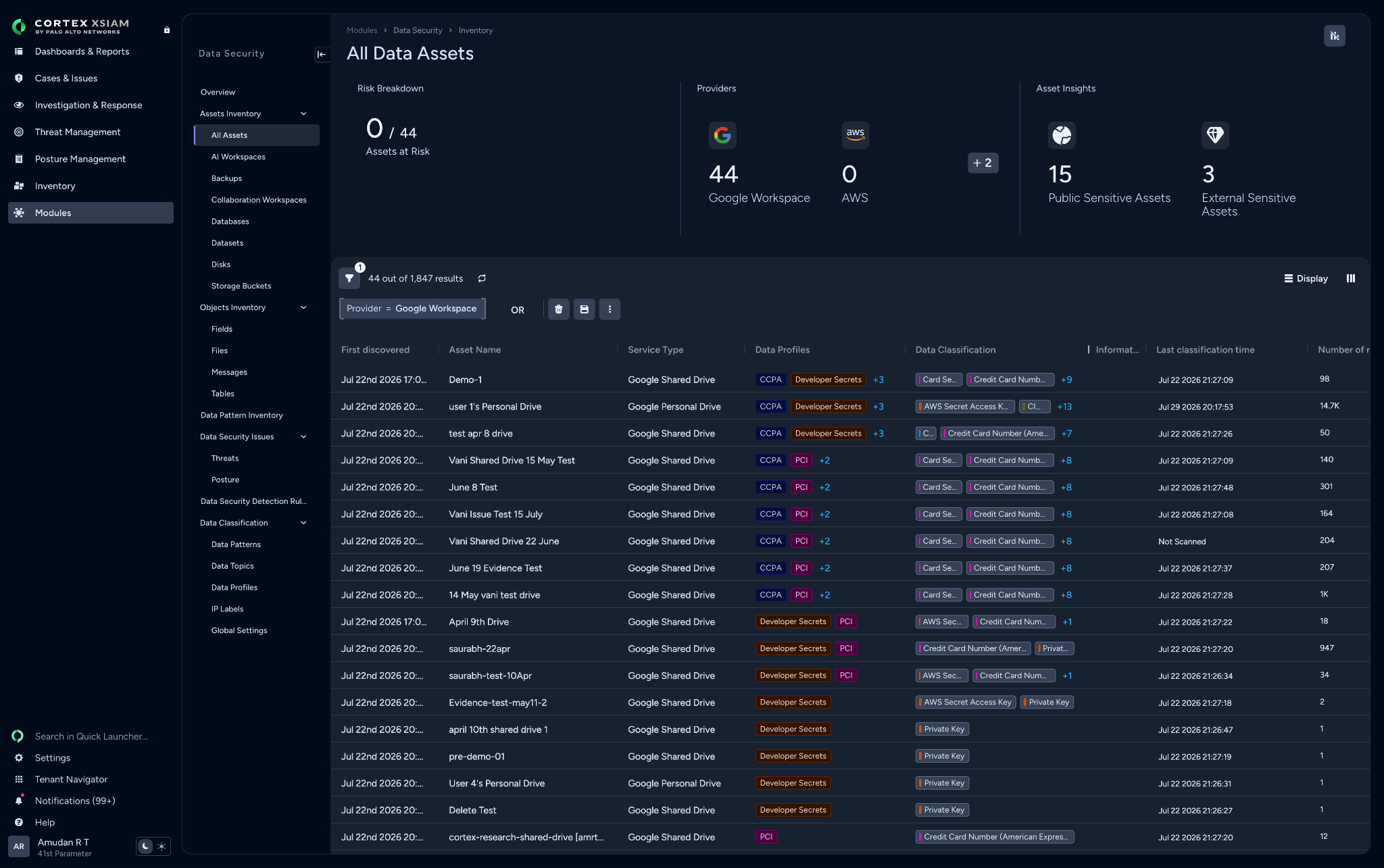
By connecting data classification with access and exposure context, Cortex Cloud can easily show teams who can reach sensitive information and where sharing configurations increase risk.
Publicly exposed sensitive data can be identified within minutes, making excessive access easier to spot. Malware detection within supported file environments adds another layer of context when investigating risky content.
Extending Visibility Into AI Data
As sensitive data moves across SaaS applications, it can also flow into AI applications through prompts, uploaded files and project data.
Employees can include sensitive information directly in prompts, upload internal documents or use proprietary data within AI projects. Those interactions introduce another destination for data that security teams need to account for.
By expanding DSPM coverage to Claude, Cortex Cloud can discover and classify sensitive prompts and files shared with LLMs or used as project data, bringing AI data into the same broader view of cloud data risk.
Take Action on Sensitive Data Exposure
Cortex Cloud gives security teams governance controls across supported SaaS applications based on the risks they uncover.
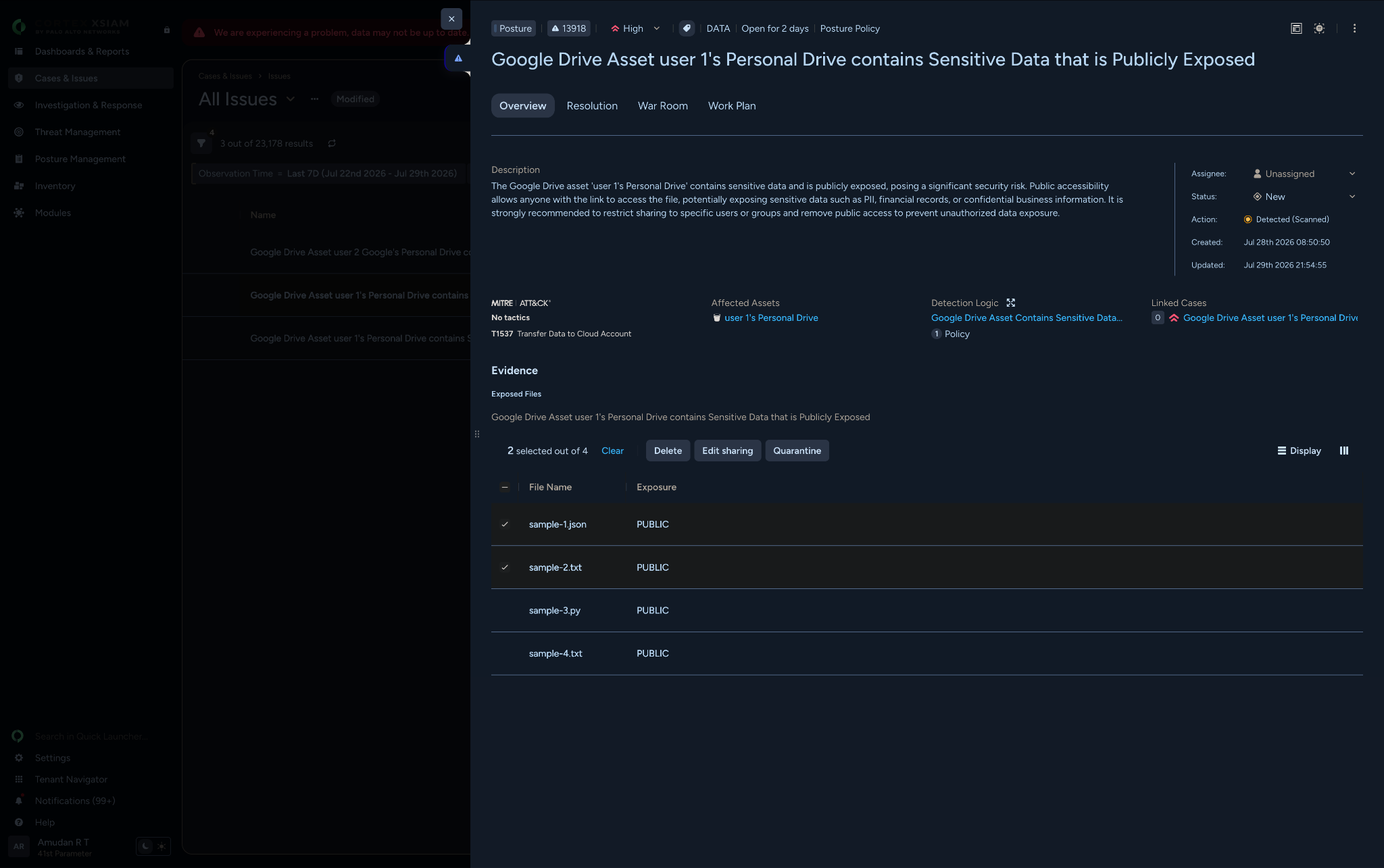
Teams can trigger incidents and notify administrators when sensitive data meets specific conditions. Depending on the application, they can remove public sharing, quarantine files, delete files associated with critical risks and apply Microsoft Information Protection labels.
Instead of stopping at discovery, teams can move directly from identifying risky data to reducing its exposure.
Take Control of the Expanding Cloud Data Footprint
The boundaries around cloud data continue to change as organizations rely on more SaaS applications, collaboration platforms and AI services.
Cortex Cloud DSPM extends data security into those environments, giving teams a more consistent way to discover sensitive information, understand who can access it, identify exposure and take action when risk emerges.
Learn More
Want to see how Cortex Cloud extends data security across SaaS and AI applications? Request a demo to see it in action.