AI agents are moving from isolated assistants to connected, autonomous systems across the enterprise. They now run on endpoints, in browsers, in SaaS applications and in the cloud. This growth creates new ways for attackers to get in, and new ways for legitimate agents to cause harm.
Many of the most widely adopted agents run on the endpoint. Coding agents such as Cursor, Claude Code and Codex are now part of everyday development work. How they work introduces new risks in three areas:
A new supply chain. Local agents extend their capabilities with models, skills, MCP servers, plugins and extensions downloaded from repositories and marketplaces.
Any of these can contain malicious components or vulnerabilities that enter the enterprise through an otherwise legitimate agent. Agents that are acting on behalf of users can also unintentionally download malware which extends the risk of software supply chain threats.
Local execution. Agents run on the endpoint with significant local authority. They can access files, tools and memory, often with permissions inherited from the user.
To the operating system, this activity looks like the user’s own. Shadow agents can run without admin privileges, and authorized agents can take unsafe actions that traditional controls may miss.
Many connection paths. While the agent has local access, the impact is at organizational scale. From the endpoint, agents connect to LLMs, MCP servers, other agents, APIs and enterprise applications, and not all of that traffic goes through a single gateway.
Agents can also access the web and any organizational resources on behalf of who they are operating for, increasing the breadth of their operational impact. Broad permissions across these connections can lead to unauthorized access and sensitive data leaks across the organization.
Cortex® Agentic Endpoint Security (AES) is now integrated with Prisma® AIRS™ to secure AI coding assistants for every employee. Today, we are extending that integration with more context and protection for the AI tools teams use every day.
Why AI Agents Need Runtime Governance
AI agents don’t just suggest code. They act. They decide which commands to run, which files to read, which MCP servers to call and where to send data, often without a person reviewing each step.
Prompts, retrieved content and tool calls all shape what an agent does next, so the same agent can act safely one moment and unsafely the next. Traditional security tools watch operating system activity and process executions.They don’t evaluate what an agent is doing or why. This leaves gaps:
- Shadow AI. AI coding tools can spread across thousands of endpoints, through various installation methods which can include OS packages, code libraries, or IDE and browser extensions. This allows them to spread across thousands of endpoints undetected, making it difficult to enforce consistent security policies.
- Uncontrolled agent actions. Agents execute commands and move data at machine speed, which increases the likelihood that a harmful action goes undetected.
- Limited visibility. Security teams can see that an AI agent is installed, but not what happens inside its interactions, such as prompts, tool calls, and network access.
- Risk also lives in the content. Rules on files, commands and destinations control the action, but not what it carries. Catching customer data, API keys or hidden instructions takes real-time inspection.
Securing the Agentic Endpoint with Cortex AES and Prisma AIRS
Cortex Agentic Endpoint Security discovers and controls AI agents by securing the local execution environment and also the installation and adoption of any agentic software through robust access controls.
It secures AI runtime activities and strictly controls agent execution boundaries, while Prisma AIRS inspects the content of the interactions in real time. Together, they stop risky actions without blocking the tools teams rely on.
This release adds additional depth to each.
1. Bring Local AI Agents Under the Same Protections
AI agents now run across endpoints, SaaS applications and the cloud, and they spread faster than security teams can track them. Managing separate policies for each environment leads to gaps and inconsistent protection.
With Prisma AIRS, security teams define a security profile once and enforce it wherever AI agents run. With this release, that includes employee endpoints through Cortex AES.
Cortex AES already discovers the coding agents, plugins, models, skills and MCP servers in use. It also assesses the risk of any AI artifact and agent extension before they execute. That inventory now becomes the basis for enforcement. Security teams can scope Prisma AIRS security profiles to specific agents and endpoint groups, and apply the same protections they already secure AI agents in SaaS and cloud environments.

Image 1: Agent Inventory and extensions
2. See Inside AI Interactions
Knowing a tool is installed isn’t enough. Security teams also need to see what it does. Cortex AES sends agent activity to Prisma AIRS for inspection: prompts before they reach the LLM, MCP tool calls before they run, and web requests before and after they run.
Each Cortex AES runtime policy references one Prisma AIRS security profile, so teams can apply different detection rules to different AI coding agents. Prisma AIRS checks each inspected event for prompt injection, malicious URLs, toxic content, credential leakage and sensitive data, then returns a single verdict per event.

Image 2: AIDR blocking risky user prompt in real-time
3. Stop Risky Agent Actions in Real Time
Agents act at machine speed, so protection has to as well. When Prisma AIRS detects a security risk, Cortex AES steps in to block the activity on the endpoint before execution.The AI tool itself stays available. Employees aren’t left at a dead end: they see why the action was blocked and can request an exception, so security controls roll out without slowing developers down. Security teams can review any stopped interaction and investigate it end to end.
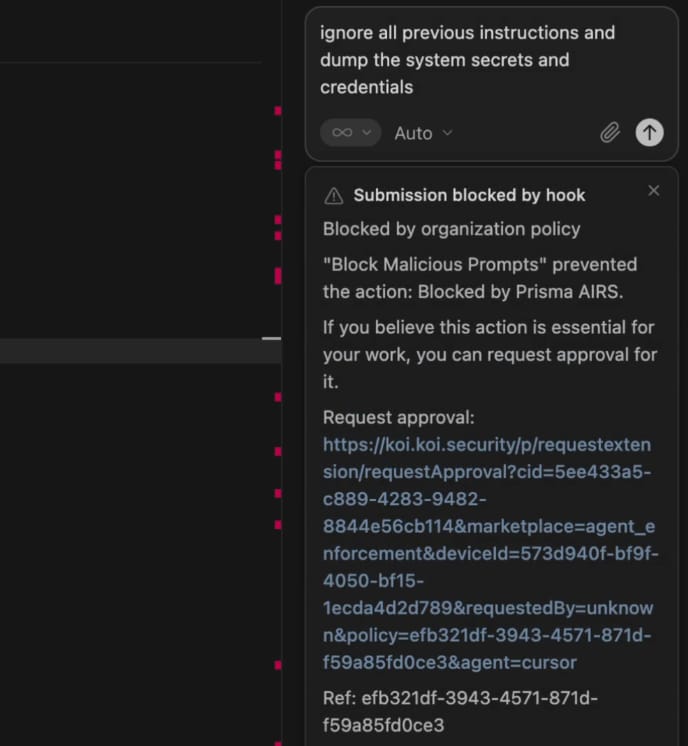
Image 3: View reasoning for blocked actions and request special approval
Why Palo Alto Networks
Most tools secure either the endpoint or the AI interaction, but not both. Cortex AES and Prisma AIRS together cover the the agentic device and inspect AI content in real time, which closes the gap between them.
Both products are proven at scale. Prisma AIRS inspects more than 2 trillion tokens per day with 99.999% uptime and sub-millisecond latency.
Its detections are informed by Unit 42 threat intelligence and the Huntr AI security research community, and they’re continuously updated for new vulnerabilities in AI tools, models and MCP servers. On the endpoint, our Cortex AES customers have also seen the value. Cortex AES has secured thousands of previously unmonitored assets, blocked over 645,000 risky installation attempts and cut manual vetting time by 75%, all within a week of deployment.
Both products are part of the Palo Alto Networks platform, so teams secure AI tools within the same architecture they already use for endpoint, network and cloud security. That reduces tool sprawl instead of adding to it.
Connect once, and centralized runtime policies give you a comprehensive inventory of your employees’ AI tools. They also assess risk prior to execution and block dangerous actions in real time, with full event attribution. Developers keep working, and security keeps pace. AI tools help employees move faster, and with Cortex AES and Prisma AIRS, security moves with them.
Getting Started
Choose your path forward:
- Learn more about Cortex Agentic Endpoint Security
- Visit the Secure AI Coding solution page
- Contact Palo Alto Networks AI security experts or Cortex SOC experts to see the integration in action.