Security teams operate in a state of cognitive dissonance where one screen shows relentless vulnerabilities and rising severity scores. But another shows reality: firewalls are holding, IPS is active, and custom configurations have blocked the exploit paths.
This gap between what scanners see and what defenses stop creates a dangerous distortion. By relying solely on scanner visibility, teams are forced into a "theoretical emergency," chasing inflated risk scores that ignore the work of active defenses.
We must move beyond simply counting defects. This is the strategy behind the new Security and Compensating Controls feature for Cortex Exposure Management. It enables a paradigm shift from managing inherent risk (theoretical danger in a vacuum) to quantifying residual risk, meaning the actual danger remaining after your defenses do their job.
The Visibility Gap
Traditional vulnerability management rewards volume over value. Scanners are diligent but myopic; they detect missing patches but ignore compensating controls, such as firewall rules or physical security measures.
The result is operational chaos. Security leaders face a scenario of seeing a critical risk score of 100 even when an NGFW rule has already neutralized the threat. This false urgency causes resource misallocation and fuels the industry’s most pervasive ailment: alert fatigue.
If everything is critical, nothing is.
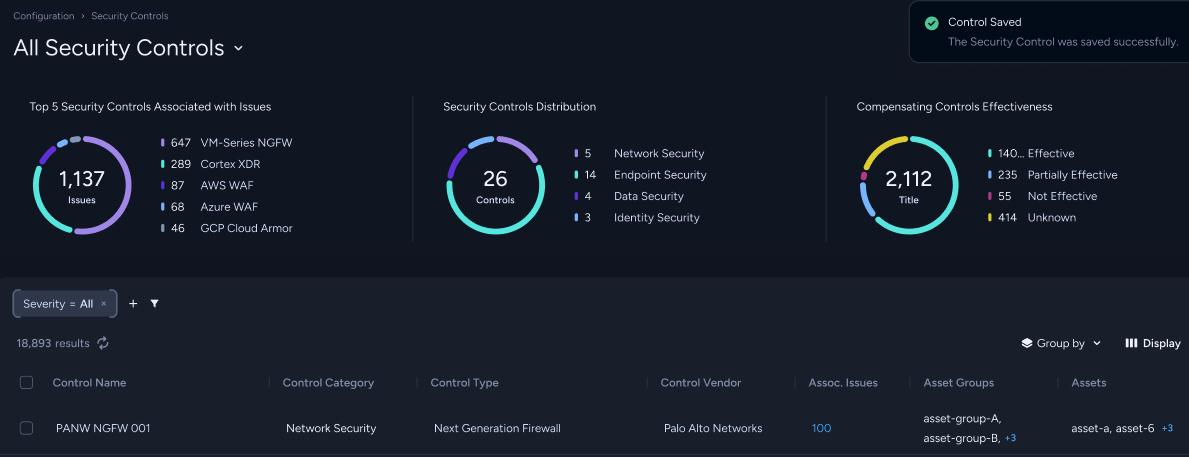
Bringing Intelligence to the Table
Our new architecture separates a control's existence from its effectiveness. It uses a two-dimensional model accounting for:
- Security Controls: The technology itself (e.g., an NGFW or XDR agent).
- Compensating Controls: The specific mitigation action (e.g., blocking an exploit).
Cortex Exposure Management validates effectiveness through both automated and manual methods. It automatically infers risk mitigation for supported products while also providing a system for human attestation. This allows analysts to explicitly define controls and verify their effectiveness against specific findings, transforming the platform into a comprehensive system of record.
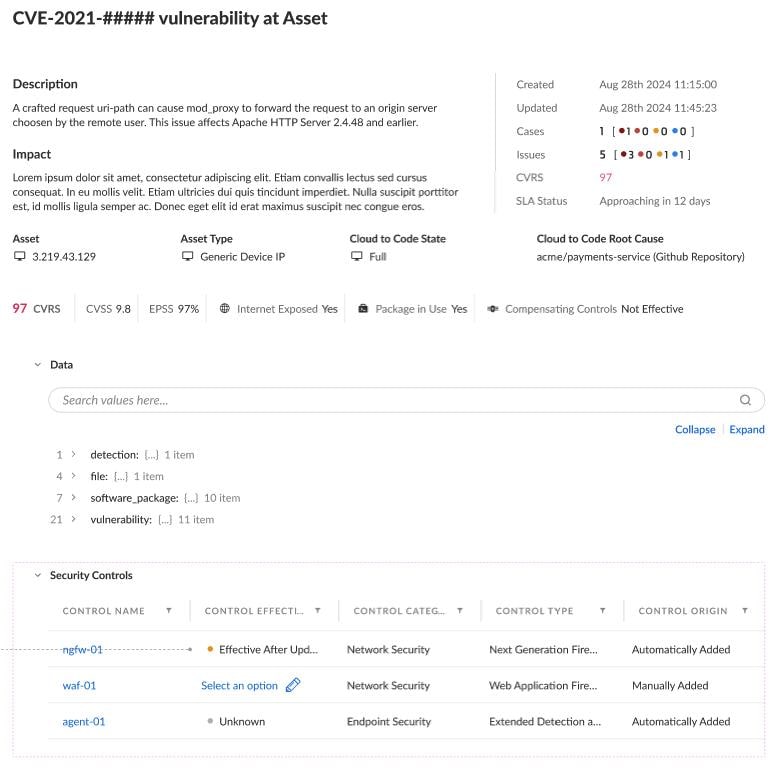
From Ticket-Takers to Risk Managers
The strategic value of Cortex Exposure Management’s Security and Compensating Controls extends far beyond cleaning up a dashboard. It fundamentally elevates the security analyst's role. No longer relegated to the reactive position of a "ticket-taker" chasing false positives, the analyst becomes a strategic risk manager capable of data-driven prioritization.
For the CISO and SOC Director, this nuance holds vital importance for two distinct reasons:
- Optimized Operations: By filtering out the noise of mitigated risks, teams can focus finite resources on the genuine, unmitigated threats that actually require patching.
- Empowered Decision Making: Security controls translate technical obscurity into business logic. Leadership can now justify security budgets by demonstrating the tangible value of existing investments and make informed decisions on strategic risk acceptance based on accurate residual scores.
A New Source of Truth
If a firewall rule, prevention policy, or segmentation control already breaks the exploit path, your vulnerability list should reflect that reality. Cortex Exposure Management’s Security and Compensating Controls lets you validate mitigation, capture attestation, and prioritize only the exposures that remain truly reachable.
Book a personalized demonstration to see how quickly you can cut false urgency, accelerate patch focus, and report residual risk with credibility.