We are living through a massive shift in how teams get work done. For years, the industry talked about digital transformation as a distant vision. Today, it is happening in real time right at the front of every employee screen. AI is no longer a simple feature. It has become the core operating system of modern work.
We see developers writing code at lightning speed and marketing teams deploying autonomous agents to handle complex workflows. This leap in productivity is remarkable, but it is also completely redefining the defensive perimeter.
The Structural Blind Spot
For a long time, security leaders operated under one comfortable assumption: If we secured the execution layer, which are traditional applications and operating systems, we secured the enterprise. We built world-class tools to watch for malicious processes. That was enough to keep the organization safe.
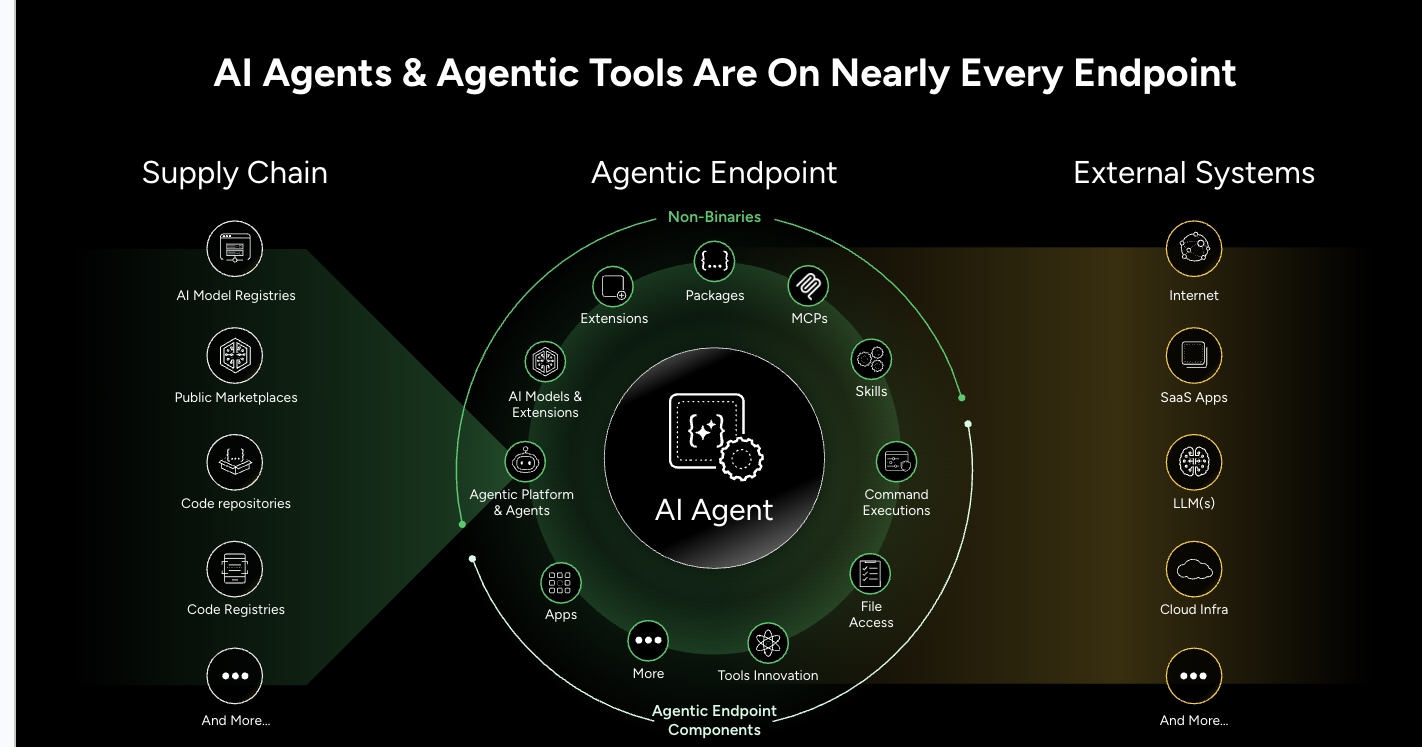
As organizations move toward frontier AI, we are discovering a structural blind spot. The modern endpoint is no longer just a device running Windows or macOS. It is a stack of agentic software, sophisticated AI models, and specialized skills. Employees often self-provision these tools to work faster.
This new "Agentic Perimeter" represents a fundamental shift in the software stack. Think about your average developer: Their environment is a web of scripts, IDE extensions, package registries, and autonomous agents. Gartner recently identified agentic AI oversight as a top cybersecurity priority for 2026. These tools are powerful and essential, yet they often operate outside the view of traditional security controls.
Shifting Left in Agentic Security
Traditional security is a game of catch-up. It waits for something to go wrong, detects the problem, and then tries to fix it. When an autonomous AI can move through an entire attack in minutes, waiting to react is just waiting for a breach to happen. Leaders should not have to choose between letting their teams use the best AI tools and keeping their organizations secure.
To thrive in this era, we need to move the defensive line. Instead of scanning for threats after the fact, we need to secure the software supply chain to include AI agents and their endpoints. When an employee connects a new AI agent, they are trying to be productive, not launch an attack. We need a way to manage the risk of trusted tools being used in untrusted ways.
This is why industry leaders are turning to Agentic Endpoint Security (AES). By placing a context aware control point directly on the endpoint, organizations can finally close the visibility gap that frontier AI is already beginning to exploit.
The 4 Pillars of Agentic Endpoint Security
Security should never slow people down. The goal is to create a safe, frictionless path for innovation to thrive. This is why customers need Agentic Endpoint Security (AES) that operates across four critical areas.
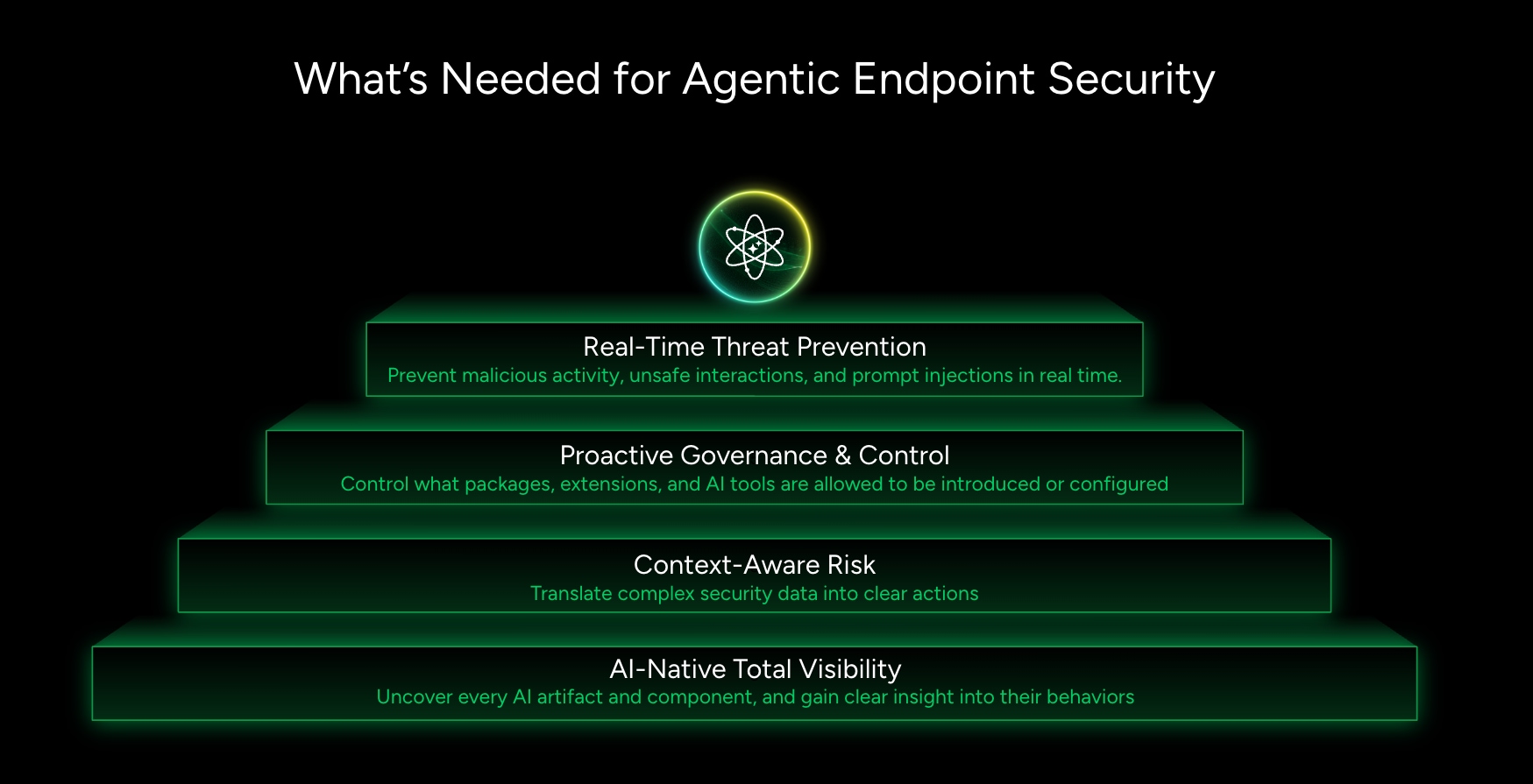
1. Visibility: AES provides total and continuous visibility into every software artifact and autonomous agent in real time. This includes complete coverage of the entire ecosystem, including AI models, extensions, MCP servers, non-binaries, and live runtime actions on the device.
2. Context Aware Risk: Using a risk engine, it performs deep analysis of every software package and AI extension. It delivers context aware risk levels based on reputation, code intent, and privilege boundaries.
3. AI Governance and Control: Security teams can govern the entire AI ecosystem by reducing the attack surface through continuous monitoring of what is installed, tracking AI agent behavior, and enforcing strict execution boundaries for all autonomous tools.
4. Prevention: AES proactive intercepts and blocks risky AI extensions before they are even installed. It also enforces ML- powered runtime policies to control agent behavior and execution boundaries in real time, stopping malicious actions and prompt injections before they occur. This shifts security from reactive triage to instantaneous prevention by controlling the agentic supply chain.
By bringing this intelligence into platforms like Cortex®, organizations see a more complete story of their agentic endpoints. This approach ensures that protection is built directly on the endpoint. That is the only location capable of providing continuous visibility and control over the entire AI attack surface in real time.
This is about more than stopping attacks. It is about giving your organization the confidence to lean into the future of AI. The era of the unmanaged endpoint is behind us.
To learn more about how to stay ahead of AI threats and secure your environment, watch our on-demand webinar or visit paloaltonetworks.com/cortex/agentic-endpoint-security.